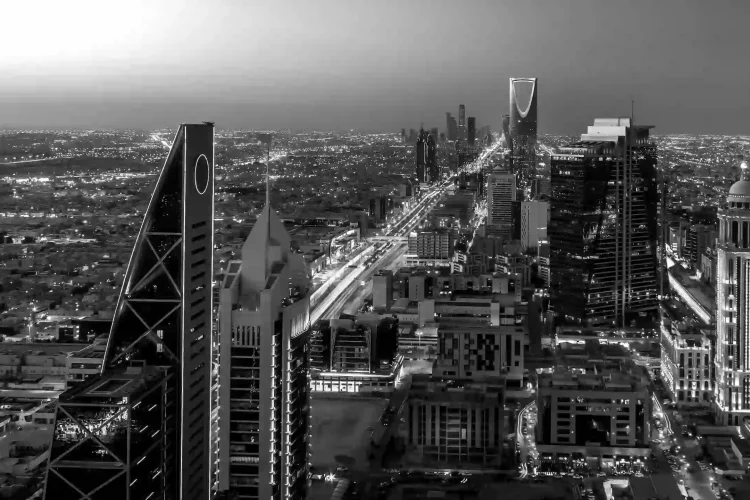
Navigating the Reality of Saudi Vision 2030 in 2026
A Decade of Transformation: Navigating the Reality of Saudi Vision 2030 in 2026
The Reality Check We’ve Been Waiting For
Six years into Saudi Vision 2030, the Kingdom is no longer building on faith—it’s building on results. But unlike the breathless headlines that dominated 2016 through 2021, 2026 brings something more valuable: a grounded assessment of what works, what’s being recalibrated, and what actually delivers ROI. The narrative has shifted from “what if” to “what’s next,” and the data tells a story of a nation that’s learned to walk before it runs.
This isn’t a perfection story. It’s a maturation story. And that distinction matters for anyone evaluating the long-term viability of the Kingdom’s economic transformation.
Part 1: The Strategic Foundation – Still Standing, Better Understood
The Three Pillars Revisited
Saudi Vision 2030 rests on three foundational pillars, and while the terminology remains unchanged, the execution framework has sharpened considerably:
- A Vibrant Society – Building an inclusive, culturally authentic nation where Saudis (particularly women and youth) can thrive economically and socially.
- A Thriving Economy – Diversifying revenue streams away from oil dependence, creating sustainable private-sector growth, and attracting long-term foreign direct investment.
- An Ambitious Nation – Positioning Saudi Arabia as a global leader in technology, culture, infrastructure, and geopolitics.
The Core Objective: Decoupling from Oil—Achieved Ahead of Schedule
The original Vision 2030 target was to reduce oil’s share of real GDP to approximately 50% by 2030. Saudi Arabia hit this milestone in 2023 and solidified it through 2025, with non-oil activities now consistently contributing between 50–56% of real GDP.
What this actually means: The Kingdom’s fiscal fortress no longer trembles when oil prices fall. This isn’t theoretical—we saw it tested in 2024–2025 when crude prices softened, yet the Saudi economy continued accelerating. Non-oil revenues reached record levels of SAR 457 billion in 2025, enabling the government to cover 35% of total budget expenditures from non-oil sources. By comparison, in 2016, this figure was negligible.
For investors: This is structural risk reduction at the sovereign level. The Kingdom is no longer a macro bet on oil demand; it’s a bet on managed diversification.
Part 2: 2026 Performance Metrics – The Numbers That Matter
Non-Oil GDP: The Cornerstone Achievement
The Metric: Non-oil activities exceeded 50% of real GDP, with real growth of 4.7% in 2023 and estimated acceleration to 5% YoY in 2025. Real GDP growth overall is projected at 4.6% for 2026.
The Context: This isn’t inflation-driven noise. The growth is broad-based, spanning:
- Manufacturing – Up 6.5% YoY, driven by increased local content in government procurement
- Wholesale and retail trade – Up 9.5% YoY
- Construction – Up 7.4% YoY
- Financial and insurance services – Up 14.4% YoY
- Information and communication – Up 8.6% YoY
These sectors are creating genuine employment and building productive capacity, not just extracting rents. The private sector’s share of total employment among Saudi nationals has reached approximately 2.5 million, a historic high.
Female Labor Force Participation: Surpassing Targets
The Metric: Female workforce participation reached 36.2% in Q3 2024, up from 23% in 2019. The original 2030 target was 30%—already exceeded by six percentage points.
The Reality: This isn’t a vanity metric. Women now represent a genuine economic force:
- Female unemployment dropped to 10.5% (a record low), down 3.6 percentage points year-over-year
- Among women aged 15–24, labor force participation reached 18%, with 13.6% employment-to-population ratio
- Professional localization in sectors like engineering, accounting, and pharmacy has expanded opportunities, with employment in specialized roles increasing by as much as 300%
Why it matters: Women’s participation correlates directly with non-oil GDP growth. Expanding this cohort by 13+ percentage points over six years represents not just social progress but a significant productivity multiplier. Saudi Arabia now has one of the fastest-growing female workforces in the Middle East.
Homeownership Rates: Climbing Toward Affordability
The Metric: Homeownership among Saudi citizens reached 63.74% in 2026, surpassing interim targets and moving steadily toward the 65%+ target.
The Policy Mechanism: Sustained government support through the Ministry of Housing, coupled with lower-cost financing programs and increased mortgage accessibility, has made property ownership achievable for middle-income families. This is essential infrastructure for a thriving society—when citizens own homes, they invest in communities rather than extracting wealth.
The Public Investment Fund: The Strategic Force Multiplier
The Metric: PIF assets under management reached SAR 3.5 trillion ($933 billion USD equivalent) by mid-2025, with an annualized return of 7.2% to shareholders since the Vision Realization Program began in 2017. By January 2026, PIF assets had grown to $1.15 trillion USD, positioning it as the fifth-largest sovereign wealth fund globally.
The Strategic Shift: This isn’t just asset accumulation; it’s strategic portfolio reallocation. PIF has:
- Increased local content in portfolio companies from 47% (2020) to 53% (2023), with total local spending reaching SAR 400 billion
- Raised the contractor participation share in awarded contracts from 37% (2021) to 67% (2024) through initiatives like the Contractors Financing Program
- Deployed over 140 partnerships and MoUs worth SAR 15 billion in 2025 alone, signaling deepening private-sector integration
The Long-Term Play: PIF Governor Yasir Al-Rumayyan has signaled that the fund targets $2 trillion by 2030 with potential to exceed $3 trillion—and the investment strategy extends to 2040 and beyond. This signals confidence that Saudi Arabia’s diversification isn’t a decade-long experiment; it’s a multi-generational restructuring.
What this means: If you’re evaluating Saudi Arabia as a market, the PIF isn’t a spending vehicle—it’s an active economic architect, directing capital toward sectors that generate jobs, drive innovation, and reduce oil dependency.
Part 3: The Giga-Project Evolution – From “Build At Any Cost” to “Maximize Impact”
The original Vision 2030 timeline (2016–2020) envisioned mega-projects as the primary levers of transformation. The 2026 reality is more nuanced: Phase 3 (2026 onward) has shifted from expansion to optimization and sustainability. This is where the real learning happens.
Part 3: NEOM & The Line: Recalibration, Not Abandonment
The Honest Assessment:
The Line—the 170-kilometer linear city envisioned as NEOM’s centerpiece—was always ambitious. Initial costs projected to exceed $500 billion, timelines stretched indefinitely, and execution challenged by construction logistics and financing constraints.
What’s happening in 2026:
- The initial Hidden Marina segment (2.4 km) is advancing toward completion, with structural work expected by 2026–2027. This pilot section will house approximately 200,000 residents across 80,000 apartments, 9,000 hotel rooms, and extensive retail and recreational facilities.
- Over 4,500 foundation piles have been installed (of 15,000 planned), demonstrating concrete progress, not theoretical design.
- Timeline realism: Full-scale completion of the entire 170-km city has been reassessed to the 2045+ horizon, with mid-section expansion projected through 2030.
- Focus shift: Rather than building 170 km of continuous urban sprawl, the Kingdom is prioritizing functional “neighborhoods” with quality design and adaptability, ensuring each module delivers value rather than merely accumulating square footage.
What this signals: NEOM leadership has learned a critical lesson—building showcase cities is less valuable than building livable, economically productive cities. The pivot from speed to sustainability is rational and disciplined. Private sector integration is deepening; partnerships with construction firms like Al Moammar and systems integrators are bringing operational rigor.
Must Read: How to Start a Startup in Saudi Arabia – Essential 8 Points
Tourism: The 100M Milestone (Already Achieved) and the 150M Horizon
The Stunning Achievement:
Saudi Arabia set a 2030 target of attracting 100 million tourists. It achieved this by 2024—six years ahead of schedule.
2025–2026 Performance:
- The Kingdom recorded 130 million tourists in 2025 (though some sources cite 116 million for 2024)
- Projected to reach 140–150 million by 2027–2028
- International leisure visitors (non-religious) now comprise approximately 50% of total arrivals, up from 40% in 2019
The New Target: 150 million annual tourists by 2030, positioning Saudi Arabia in the top 10 most-visited countries globally. Tourism now contributes nearly 5% of GDP (up from 3% in 2019) and employs over 1 million people.
The Infrastructure Response:
- Riyadh Air launched in 2023; Delta Air Lines begins Atlanta-Riyadh service in October 2026—the first direct US-Saudi flights.
- King Salman International Airport is under construction, designed to handle exponential visitor growth.
- Red Sea tourism projects (luxury resorts and water-based attractions) are advancing toward 2027–2028 opening.
- Hotel capacity: The Kingdom is adding 300,000+ new hotel rooms through 2030.
Why this matters: Tourism is the ultimate test of a nation’s ability to build globally competitive infrastructure. When Western travelers (UK, Europe, US) routinely choose Saudi Arabia over established competitors, the economic transformation is no longer theoretical.
Infrastructure: Connectivity as Competitive Advantage
King Salman International Airport represents more than architectural ambition. It’s strategic infrastructure designed to:
- Handle 120+ million annual passengers by 2035
- Function as a regional logistics hub competing with UAE and Qatar
- Support the 2034 FIFA World Cup and Expo 2030 infrastructure demand
The Red Sea coast is being developed as a luxury tourism and industrial logistics hub, combining leisure appeal with maritime trade efficiency—linking to regional commerce corridors and global shipping routes.
Part 4: Digital & AI Sovereignty – The Next Competitive Frontier
HUMAIN: Saudi Arabia’s AI Play
In 2025–2026, a critical strategic decision became apparent: Saudi Arabia isn’t outsourcing AI infrastructure to American or Chinese providers. Instead, it’s building HUMAIN—a PIF-backed, full-stack AI company.
The Recent Announcement (January 2026):
HUMAIN and the National Infrastructure Fund (Infra) announced a $1.2 billion strategic financing framework to develop up to 250 MW of hyperscale AI data center capacity. The agreement was announced at the World Economic Forum 2026 in Davos—a deliberate signal of Saudi Arabia’s AI ambitions to global investors.
The Broader Infrastructure Play:
- HUMAIN has a joint venture with Saudi Telecom Company’s subsidiary center3 to develop 1 GW of AI data center capacity, beginning with an initial 250 MW
- Partnership with xAI (Elon Musk’s venture) to build a 500 MW+ hyperscale facility
- Collaboration with Qualcomm to deploy 200 MW of AI inference infrastructure in 2026
- Total targeted capacity: 1 GW by 2030
What this signals: Saudi Arabia is positioning itself as a regional AI and data center hub for:
- Training advanced Arabic large language models (HUMAIN has already developed some of the world’s most advanced Arabic LLMs)
- Providing compute capacity for regional and global enterprises
- Creating intellectual property around Arabic-language AI
The competitive angle: With energy costs among the lowest globally, established renewable energy infrastructure, and geopolitical stability, Saudi Arabia can offer AI infrastructure economics that rival (and potentially undercut) established players. This positions the Kingdom not as a technology follower but as infrastructure enabler.
Part 5: The Forward Outlook – The “Big Three” Events as Catalysts
2027: AFC Asian Cup
Saudi Arabia will host the AFC Asian Cup in 2027—a 24-team tournament with continental significance. While less globally prominent than the World Cup, it serves as a infrastructure and operations stress test, requiring:
- Stadium construction and upgrades
- Transportation logistics for 500,000+ visitors
- Hospitality and security coordination
2030: Expo 2030
Riyadh will host Expo 2030, positioning itself as a global stage for innovation, sustainability, and cultural exchange. The last major Expo in the region was Dubai 2020 (held in 2021). Expo 2030 will attract 25+ million visitors and serve as a flagship demonstration of Vision 2030 achievements.
Infrastructure spending for Expo 2030 is already integrated into Saudi Arabia’s 5-year capital plan, with dedicated site development in progress.
2034: FIFA World Cup
The crown jewel. Saudi Arabia will be the first Middle Eastern nation to host the FIFA World Cup since Qatar 2022. The scale is unprecedented:
- 12 stadiums required (some new, others refurbished)
- Expected 5 million foreign visitors over the tournament
- Global media platform positioning Saudi Arabia as a progressive, sports-capable nation
- Direct economic impact estimated at $20+ billion
The 2034 World Cup infrastructure is woven into the kingdom’s broader strategic planning. King Salman International Airport, NEOM developments, and expanded hospitality capacity are being sequenced to achieve World Cup readiness by 2034.
The catalyst effect: These events are more than tourism drivers. They’re milestones that force operational discipline and attract capital. In the 2020s, global investors will be watching how Saudi Arabia executes these events—successfully hosting them validates the Vision 2030 transformation narrative at the highest levels.
Part 6: The Honest Assessment – Where Reality Meets Aspiration
What’s Working
✓ Economic diversification is structural, not cyclical. Non-oil GDP now drives growth regardless of oil prices.
✓Job creation is real. 2.5 million Saudi nationals in private sector employment; female participation surging by 13+ percentage points.
✓ Fiscal discipline is improving. Budget deficit projected to shrink to 3.3% of GDP by 2026, down from historical highs.
✓PIF is functioning as designed. Strategic capital deployment, 7.2% annualized returns, and deepening private-sector partnerships.
✓ Tourism is exceeding targets. 130+ million visitors annually versus 100 million target—this is overdelivery, not hype.
✓Infrastructure is visible and operational. Airports, roads, digital infrastructure, renewable energy—the physical transformation is undeniable.
Where Recalibration Matters
- Mega-projects require pragmatism. NEOM’s Line is being rescaled; timelines are extending. This isn’t failure—it’s learning.
- Oil prices still matter. While non-oil diversification cushions the economy, sustained low oil prices would constrain government spending power and PIF investment velocity.
- Youth employment remains a challenge. While overall unemployment is at 2.8% (a historic low), youth employment-to-population ratios in certain demographics require sustained focus.
- Private investment must accelerate. Government remains the primary investor; true diversification requires deep private-sector capital formation.
- Regional competition is intensifying. UAE, Egypt, and others are pursuing similar strategies. Saudi Arabia’s advantages (capital, scale, energy) are significant but require continued execution excellence.
Part 7: Strategic Implications for Global Investors & Business Leaders
The Macro Case for Saudi Arabia in 2026
- Structural diversification reduces volatility – Non-oil GDP now provides earnings stability regardless of energy markets.
- Fiscal discipline is improving – Budget deficit trajectory is favorable; revenue growth is broad-based.
- Demographics are increasingly favorable – Youth cohort is large, female participation is expanding labor supply, and population growth supports domestic consumption.
- Infrastructure is world-class – From digital to physical, the Kingdom is building at global standards.
- Capital is abundant and strategic – PIF’s $1.15 trillion can deploy capital at scale, and its 7.2% returns demonstrate rigorous deployment discipline.
The Execution Risk to Monitor
- Geopolitical volatility – Regional conflicts could disrupt operations and investor sentiment.
- Oil price weakness – Sustained crude prices below $70/barrel would pressure government spending.
- Giga-project execution – NEOM, World Cup infrastructure, and Expo must deliver on time and budget.
- Private-sector scaling – Government leadership must translate to robust, self-sustaining private-sector growth.
The Question for 2026 and Beyond
As global capital increasingly recognizes Saudi Arabia’s structural transformation, the relevant question shifts from “Will Vision 2030 work?” to “At what speed will private investment match public sector leadership?”
The government has proven it can build, finance, and scale transformative projects. The next phase requires:
- Private equity and venture capital deploying capital in non-oil sectors
- Foreign direct investment increasing beyond government-linked contracts
- Saudi entrepreneurs building globally competitive enterprises
- Regional and global firms competing for talent and market share in the Kingdom
For investors, business leaders, and strategists: 2026 is the year to move from observation to strategic positioning. Saudi Arabia’s transformation is no longer a hypothesis—it’s an operational reality with 10 years of evidence. The question is no longer “if,” but “how deep do you want to engage?”